


What does a typical classroom ambiance remind you of?
A heterogeneous group of students, teachers, teaching aids, smart boards, and instructional practices.
Well!
This is not all!
A typical classroom also has some fidgety students, attention-seeking kids, and some constant interruptions in the teaching process.
While teaching is a rewarding profession, it also comes as a complete package with several hardships including behavior issues in students.
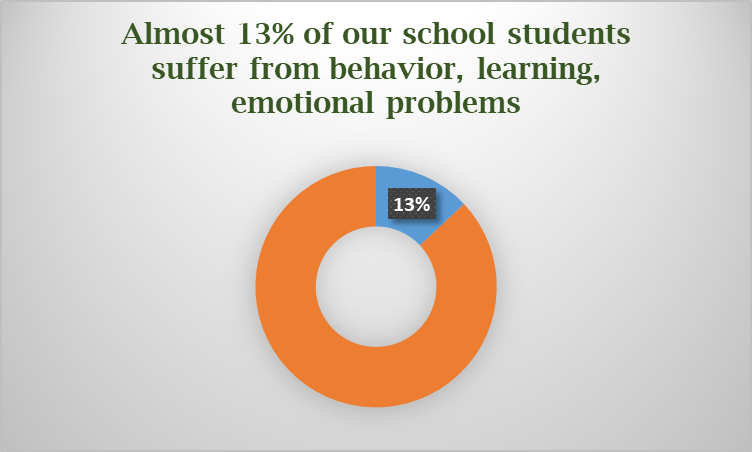
12 to 13% of our school students suffer from behavior, learning, emotional problems.
Today, our teachers need advanced knowledge to manage the student’s behavior for a holistic learning experience. Let’s brush up our knowledge about behavioural skills, and learn the best ways to handle our budding stars in a classroom.
Read on to know some fascinating aspects of behavioural training for teachers.
What are Behavioral Skills?
For students, skills and behaviors are imperative to boost academic outcomes. Particularly, behavioural skills help students to deal with their external environment, including peer interactions, their rapport with teachers, and other factors of the learning space.
Typically, behavioural skills for students in the classroom include their ability to cooperate, interpersonal skills (for collaboration), attitude towards learning, general discipline and active listening, etc. In the broadest sense, these behavior skills examples largely determine a student’s academic success. At the same time, these skills and behaviors also distinguish high achievers from other peers. For students, communication, the ability to stay organized, technical skills (digital literacy), collaboration, creativity, etc. are some vital behavior skills examples.
As a teacher in a traditional or online school, it is common to face behavior challenges while teaching. After all, we are dealing with the most stressed-out and restless generations ever, GEN Z AND ALPHA!
Some Hard Facts Before We Move On
- 77% of the Indians have at least one symptom of stress.
- 51% of Indian youth was distressed (between 18 and 24 years).
- Gen Alpha (born between 2010 in to the 2020’s) finds it difficult to sit at one place for more than 10-15 minutes

With rampant challenges and growing complexities around us, all teachers and stakeholders need a sound behavioural training to address these classroom issues. Let’s gauge the importance of behavioural skills for students and teachers before discussing the strategies.
Importance of Behavioural Skills for Students and Stakeholders
Academic Performance and Motivation
A student’s motivation to learn has a direct impact on achievement levels (academic). But do you know that behaviour also contributes to one’s academic performance?
Well, a research further adds an interesting dimension to this!
In students, behavioral challenges lead to low motivation. And ultimately, this motivation level results in poor academic performance. While these issues are a part and parcel in a teacher’s life, behavioural skills training is there to help them. With this, teachers learn how to plan right interventions for students. And eventually, they support better academic achievements by minimizing the possibilities of damage.
Conducive Learning Environment for All
Have you ever wondered about the actual impact of a good classroom environment?
Let’s discover together!
A conducive learning space is imperative to help all individuals co-learn effectively.
A good learning space also adds great value to the learning process by making it more secure, non-judgmental and welcoming for all types of students. All students have different personalities. And behavioural skills for students in the classroom help in establishing a peaceful learning environment without conflicts and chaos. As teachers, we must set rules well in advance, check on undesirable behavior, and involve students in creating a good learning space to inculcate the right skills and behaviors.
Better Student Interactions/Improved Collaboration
The next reason why teachers must hone their skills through behavioural training is to help students learn to collaborate. Today, this global village demands effective collaboration skills. And we all know that the ability to collaborate is one of the key 21st-century skills.
Positive student interactions are impossible without effective behavioural skills. On the other hand, good student interactions (peer to peer collaboration) gives them new perspectives, hones higher order thinking skills, and allows them to delve on innovative ideas seamlessly. A calm and comfortable classroom environment seamlessly allows great collaboration amongst heterogeneous student groups.
You can know about the best collaboration techniques in an online school by visiting this page.
It’s now time to move on to the strategies of developing behavioural skills for students in the classroom.
How to Develop Skills and Behaviors in Students in a Traditional/Online School?
Teachers can follow these tips/strategies to develop behavioural skills for students in the classroom.
- Establish realistic classroom rules with the students to set expectations right.
- Look for warning signs (red flags) if any related to student behavior such as learning disabilities, mental health disorder, or other medical conditions, etc.
- Allow brain brains to manage fatigue levels and keep up the lively vibe in an traditional/online classroom.
- Keep feedback strictly constructive at all times, and boost the student’s moral to do better.
- Acknowledge big and small achievements.
- Collaborate with school academicians and parents (when needed) to work on behavioural skills.
- Understand the learning styles of students. And offer alternatives as per the student’s preferences (Please read this article to know more about learning styles)
<In India, the range of learning disabilities in students is between 2.16 to 30.77%>
Final Thoughts
Managing unwanted behavior can be tough at times. But thankfully these components of behavioural skills training offers the right solutions. Gear up to create your dream classroom. And make the rewarding teaching profession all the more gratifying!
Before you leave, we invite you to a world of innovative teaching and learning. Visit this page to know how India’s best online school is transforming the lives of students.
Thanks for Reading!
Frequently Asked Questions
- Share some behavior skills examples.
Creativity, communication, digital literacy, staying organized etc. are some of the behavior skills examples. - What are the components of a behavioural training?
Broadly, a behavioural skills training aims at developing the ability to handle students through verbal instructions, modelling behavior, and effective feedback to work on behavioural skills for students. - How to develop behavioural skills for students in the classroom.
Create a welcoming and secure learning space without any threats like bullying or judgment etc. Let students be the decision makers in the rule making process. Allow enough opportunities to unleash their true potential. And set limits to keep challenges at bay.
Suggested Read
- Educational Robotics: A Stride Forward In Online Education
- Holistic Development For Students: Meaning & Importance
- 5 Parenting Tips To Build Lasting Self Esteem
- How To Increase IQ In Child: Expert-Recommended Tips & Activities
- Exam Motivation: Ace Your Exams And Achieve Your Academic Goals!
- Be The Best Parent You Can Be! Effective Parenting Tips
- Time Management Tips For Students
- Gaming In Education: A Useful Tool In The 21st Century?
- Fresh And Super Fun Role Play Activities For Kids
- Retaining The Pride Of A Celebrated Profession: Why Should We Respect Teachers?
