
Kicking, rolling on the floor, screaming, hitting, and shouting are some common signs of a child’s meltdown. These temper tantrums, outbursts, and meltdowns are often unmanageable. And naturally, they cause a great deal of distress to parents.
With the hustle and bustle of everyday lives and numerous stressors around parents, these meltdowns are the last thing that they would ever invite to their family. Despite our efforts to keep these outbursts at bay, the reality is that most of us face these problems day in and day out.
Many times, we fail to understand that these meltdowns are important for us adults to understand that the child has some unmet needs that need our attention. At the same time, we also need to battle with the problem that the child is often incapable of expressing his/her exact feelings during an outburst.
It’s time to address this problem for good. Let’s explore the ways to handle a child’s meltdown mindfully:
Read on.
Ways to Deal with a Child’s Meltdown Mindfully
1. Understand Possible Triggers and Behavior Hints
To start with, it’s important to understand the possible triggers and gauge the reasons behind a particular behavior. Many of us ignore this part, believing that outbursts are simply random in nature. However, if observed carefully, there are some common points, factors, and reasons why children get angry.
Try to notice the location, time of the day, the action/happening around, some common problems (such as the inability to bear with extreme temperatures), etc., during and before the outburst.
Now make a note of these to compare a couple of meltdowns for problem areas. If you are not confident about finding the right solution on your own, do not hesitate to approach an expert to find a way out.
2. Use the Right Phrases
As adults, our words are more powerful than we think. Selecting the right words boosts a child’s self-esteem, while inappropriate language is always harmful to a child’s mental and emotional health.
To handle a child’s meltdown, you can make use of the following phrases (suggested by experts) and handle the situation well:
“It’s fine, let’s talk when you’re ready!”
“I want to understand how you feel.”
“Help me understand what you’re trying to say?”
“I love you, even when you’re upset and angry.”
“We will figure out a better solution to this problem together.”
“It’s okay to feel like this. Please try not to hurt anyone.”
“I am always there for you?
Phrases like these are great to calm the child.
3. Know the Science Behind Behavior Issues
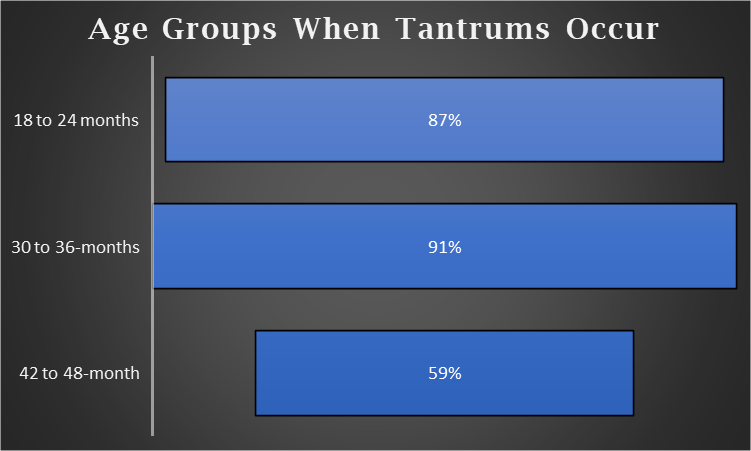
Let’s start with some findings about the most vulnerable stages of early childhood for tantrums or meltdowns.
Here’s what experts say:
| Age Groups When Most Tantrums Occur | % |
| 18 to 24 months | 87% |
| 30 to 36 months | 91% |
| 42 to 48 months | 59% |
Some common types of outbursts are:
- Some children get angry and frustrated when there is a slight challenge for them.
- Some children find it difficult to calm down once they get upset.
- In many cases, a high level of irritability can later turn into a mental illness.
The science behind a child’s meltdown is a complicated physiological response that is closely related to their brain’s threat-detection system. So, for parents, it is essential to create a sense of safety for the child to overcome an outburst/emotional storm.
Further, experts break down this response system by comparing the amygdala (the part of the brain responsible for processing emotions like fear or anger) to a smoke detector system of the brain, and the hypothalamus (the brain’s part controlling the unconscious functions) to the person deciding how to handle the fire.
During a difficult situation, children feel stressed as they lack self-regulation skills.
4. Help the Child Communicate the Emotion
Like many other situations, handling temper tantrums also needs clear communication. To manage the child’s outbursts, understand triggers, and plan a response system, you need to know what’s going on inside them.
Speak about emotions in everyday interactions, and highlight the big ones that can lead to outbursts clearly to help your child speak about how he/she feel.
For instance, anger, fear, and frustration might seem the same to the child. But these are different from each other, and need different explanations. To avoid a troubling meltdown, play games with your child to teach him/her how to label emotions. This will help in planning the right strategy and avoid extreme problems like physical injury or safety threats (to the child and the adults in the family).
5. Embrace a Holistic Approach
To manage meltdowns, you must work on the child’s emotional regulation skills at all times. These simple practices will help you follow a holistic approach, and gradually, your child will learn to cope with big emotions, thereby minimizing the outbursts.
Start with these practices:
- Practice gratitude in the morning.
- Build self-awareness to set realistic expectations.
- Meditation.
- Anger management techniques like counting, stress balls, and delaying reactions, etc.
6. Be An Active Parent
To understand your child’s needs and manage challenges like meltdowns, your active involvement as a parent is the key. Keep an eye on your child’s temper issues, and seek help if you feel the need.
Remember that procrastinating or ignoring these outbursts can lead to bigger mental health issues in the future. So, understand your role to plan an early intervention and avoid the devastating impact of negligence at all costs.
Final Words
With children, outbursts, meltdowns, and tantrums are signs of failing to cope with big emotions. Learn the art of navigating these emotions, and empower your child with the right strategies by developing essential skills like RESILIENCE!
If you find it difficult to manage your child’s behavior in a large classroom of a traditional school, do try online schooling with an accredited virtual platform.
Thanks for Reading!
Frequently Asked Questions
- Why do children have meltdowns?
When children find it difficult to cope with a situation, they feel stressed, and meltdowns occur due to the lack of self-regulation skills in them. - How to help a child during a meltdown?
Use positive phrases and help the child fight the stress by offering solutions to the problem. You should also follow effective strategies like meditation, practicing gratitude, and helping the child label emotions appropriately.
Suggested Read
- Student Habits That Can Transform a Student’s Life
- ICT in Education: How is it Transforming Teaching and Learning Process
- Empowering Students: 10 Basic Computer Skills to Master in 2026
- Blended Learning- A Technology-Backed Solution to Deliver Student-Focused Instructions
- How to Increase Memory Power: 10 Practical Tips for Students
- Personal Grooming for Students: Benefits, Ways to Teach, Tips and More
- How to Become Topper: 10 Easy Yet Practical Strategies
- Practical Strategies and Effective Steps to Overcome Laziness
- 10 Captivating Games for English Learners
- Profound Benefits of Drawing in Education and Tips to Develop this Skill in Students
- Gaming In Education: A Useful Tool In The 21st Century?
- 10 Life Skills for Students: Building Leaders of Tomorrow
- Educational Robotics: A Stride Forward In Online Education
- Exam Motivation: Ace Your Exams And Achieve Your Academic Goals!
- Time Management Tips For Students
