


We all are experiencing a rapidly transforming world, increasingly dominated by innovation and technology!
And digital technologies are transforming all aspects of our lives including education and student outcomes.
What is ICT in education, and how does it materialize the promise of technology in the Indian context?
Let’s discover information and communication technology in education today, and understand what it has in store for our Indian students and stakeholders!
Read on.
What is Information and Communication Technology in Education?
ICT in education refers to electronic delivery systems and computer activities used to carry out the teaching and learning process. Television, radio transmission, and presentations (projectors) fall under this category. In the past few years, digital education and ICT supported students and stakeholders as powerful tools during the global pandemic. Since then, technology-driven solutions have been trusted as powerful tools to bring much-needed change to the educational landscape!
Let’s dig deeper and understand why is ICT important in education and its functionalities.
Why is ICT Important?
A Foundation for Modern Classrooms
Both reforms in Education and ICT are crucial for modern classrooms. Technology helps students to grasp concepts with engaging content. It makes complex topics easy to understand. And eliminates several limitations of traditional instructional methods.
Improved Better Ways to Learn
The world has moved beyond teacher-led classes. Digital education and ICT are excellent to embrace new ways of learning. Collaboration, discussion forums, flipped classrooms, projects, and web conferencing software make learning boundless. And today, it is easier to share information at a reduced cost!

It’s time to jump to the next section!
How Does ICT in Education Work?
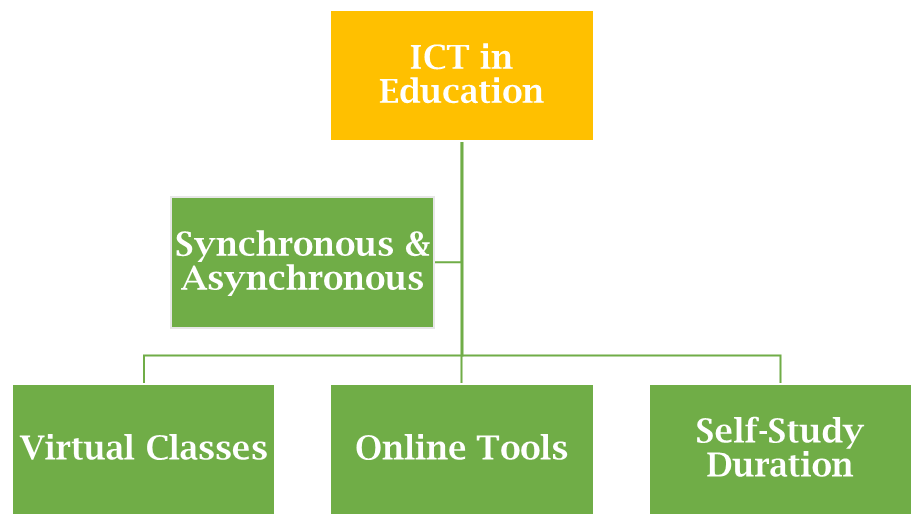
The Learning Management System (ICT and teaching)
Virtually teaching takes place without any location or time barriers. Students and teachers log in through the ‘Learning Management System’. And teachers upload/share content through presentations, screen-sharing options, videos, multimedia content, etc. Teaching, interactions, and assessments are conducted online through the LMS.
Today, virtual classrooms have revamped instructional delivery with the power of ICT in education. These classes not only allow real-time interactions between students and teachers. But also enhance the quality of teaching and learning. Top online schools, EdTech platforms, and post-secondary institutions contribute to this all-new era of information and communication technology in education, serving new-age learners across the globe.
Synchronous and Asynchronous Learning
Gone are the days when students and teachers were depended on a physical structure for classroom experiences. With ICT and teaching (synchronous) wherein real-time interactions take place. Additionally, there is an option of asynchronous learning wherein students make use of the uploaded content (worksheets, assignments, lessons, quizzes, puzzles, audio lectures, exercises, etc.) independently. For support, teachers, and academicians of top online schools provide options like chat, messaging, e-mailing etc. This makes it highly suitable for students who are introverted, differently-abled, or the ones who prefer to study on their own.
So if you still doubt is ICT important in education?
Think about this scope of high-quality education across the remote locations of our vast country!
Assessments and Tracking
The potential of education technology makes it easier to monitor performances and track malpractices. AI tracking, controls, monitoring mechanisms, and tracking tools make online education and ICT highly convenient.
Online tools also set stakeholders free from many manual activities such as mapping attendance, maintaining data, etc. When applied successfully ICT in education also trims down the chances of missing minute learning gaps. The edge of technology makes the educational process highly personalized for students by altering instructions as per their unique personality types.
Technology also adds convenience and ease during online assessments. And remote proctoring further makes the process reliable.
The understanding of ICT importance in education is incomplete without taking you through its pros and cons!
Advantages and Disadvantages of ICT in Education
Advantages
- Makes learning comfortable for gifted, differently-abled, introverted, and anxiety-prone students.
- Education and ICT offer more support and reduce chances of negativity (school violence, harassment, bullying, etc.).
- Promotes student engagement and motivation as well.
- Minimizes human effort of everyday travel, manual tracking, data management, etc.
- Systematic and sequential learning with mastery learning opportunities.
- Boosts independent learning skills.
- Encourages creativity.

Disadvantages
- Can be distracting at times due to overexposure to content and information sources.
- ICT and teaching (virtually) are not appropriate for students who need constant teacher assistance.
- If not monitored well, online tools can lead to excessive screen time.
- There is a chance of reduced human communication with too much asynchronous duration.
Some Related Facts!
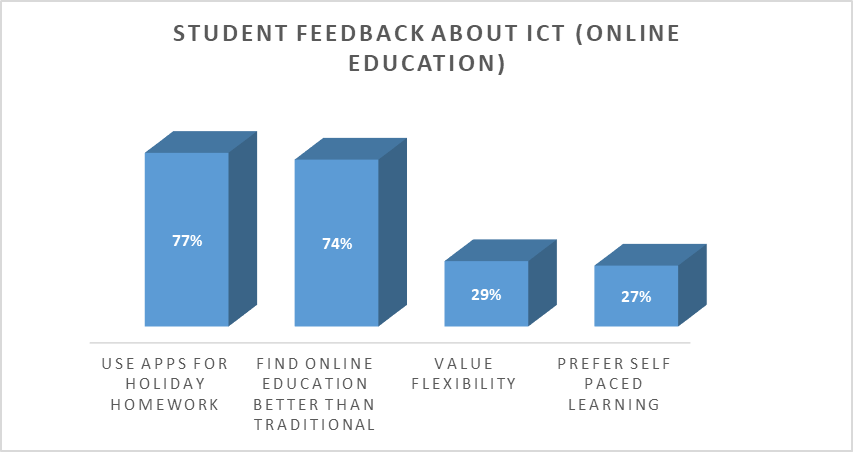
- Survey findings about what students feel about online education:
| Survey Finding | % |
| Use apps for holiday homework | 77% |
| Find online education better than traditional | 74% |
| Value flexibility | 29% |
| Prefer self-paced learning | 27% |
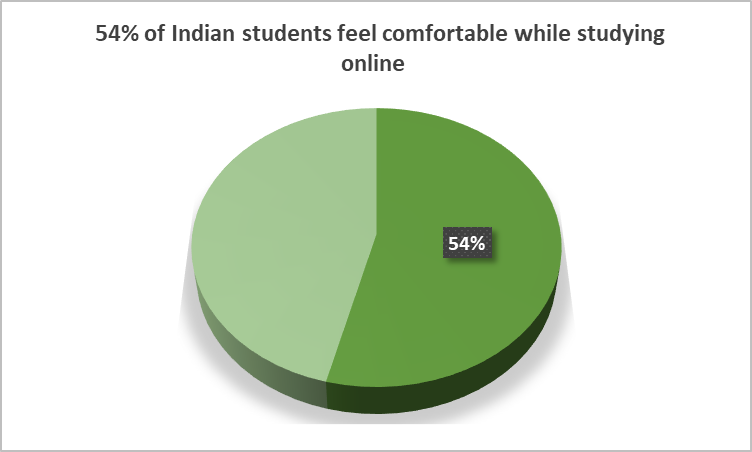
- 54% of Indian students feel comfortable while studying online.
- Digital Initiatives by the NCERT under the MOE, Government of India:
| Digital Initiatives | Details |
| PM e-VIDYA | Educational resources |
| ePathshala | Educational e-resources (textbooks, audio, video, etc.) |
| DIKSHA | Digital Infrastructure for Knowledge Sharing |
| MOOCs on SWAYAM | Massive Open Online Courses for classes IX to XII |
| NISHTHA | Integrated Teacher Training Programme |
| ICT Curriculum | National Policy on ICT in School Education |
| Accessibility in School Curriculum | To address special educational needs |
Final Thoughts
Investing in information and communication technology in education guarantees better information access and great learning opportunities.
Utilize the potential of digital education and ICT. And prepare your students for a promising digital future!
Discover the most seamless admission process of India’s top online school. Do read about our admission process in detail here.
Frequently Asked Questions:
- What is the impact of ICT in education?
ICT extends the scope of education beyond boundaries. It serves students according to their best-fit preferences. - Is ICT important in education?
We need ICT to improve the reach of education across physical and other barriers. Virtual classrooms are convenient to continue education. - How can we use ICT in the classroom?
We can use ICT in the classroom by integrating online tools into the curriculum. Smart classes, teaching aids, and virtual software are some ways of incorporating ICTs. - What are the ICT tools used in education?
Some common ICT tools are:- Projectors
- Computers (with internet)
- Radio
- Television
- Presentations
- Software and Applications
- What is the role of ICT in education?The world acknowledges ICT importance in education as a support to mainstream education. It makes all academic and non-academic processes convenient for students and stakeholders.
- Define ICT in Education.
ICT in education is the use of information technology in education. - What is the full form of ICT in education?
ICT in education stands for, information and communication technology in education.
Suggested Read
- Educational Robotics: A Stride Forward In Online Education
- 10 Super Fun Color Games and Activities for Kindergartners
- Boosting Lifelong Success: The Benefits of Field Trips for Online Students
- Taking on A Bigger Role- Why K8 School is India’s Best Online School?
- Holistic Development For Students: Meaning & Importance
- 5 Parenting Tips To Build Lasting Self Esteem
- How To Increase IQ In Child: Expert-Recommended Tips & Activities
- Exam Motivation: Ace Your Exams And Achieve Your Academic Goals!
- Be The Best Parent You Can Be! Effective Parenting Tips
- Time Management Tips For Students
- Gaming In Education: A Useful Tool In The 21st Century?
- Fresh And Super Fun Role Play Activities For Kids
- Retaining The Pride Of A Celebrated Profession: Why Should We Respect Teacher
