

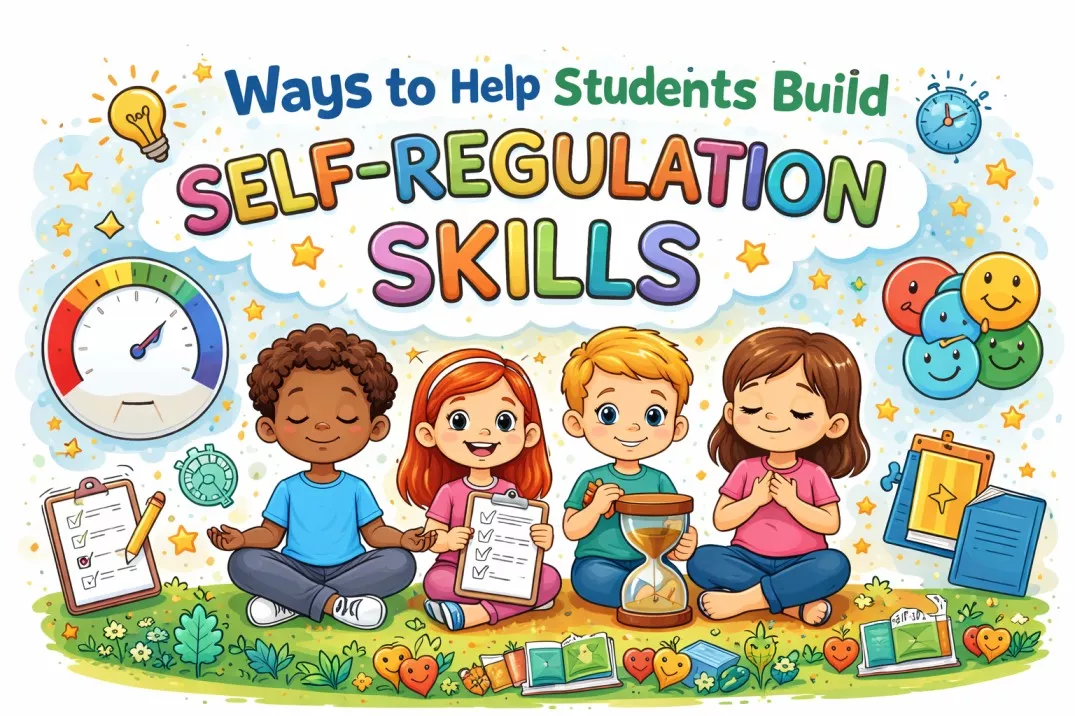
Emotions are an indispensable part of human life. It shapes our attitude and helps us experience different happenings day in and day out. While emotions play a crucial role in life, they can be complicated for students to understand.
To lead a fulfilling life, we all need to learn the art of managing and regulating emotions. Especially for students, emotional regulation is a key to success as it promotes academic success and supports the process of relevant skill-building.
Let’s learn about the ways of building self-regulation skills in students today.
Read on.
9 Ways to Help Students Build Self-Regulation Skills
1. Understanding Emotions
Building self-regulation skills is impossible without creating awareness of emotions in the first place. Many students are confused with their emotions and fail to communicate their feelings accurately. Start with simple activities like playing emotion games (identifying symbols and associating these with emotions), and talk about emotions in everyday life to help your student understand these well. As adults, it is also important to develop a positive approach towards all types of emotions, including the big/strong ones. Once you understand how to embrace and normalize all types of emotions as a regular part of life, it gets easier for the student to embrace strong emotions and develop resilience to deal with these.
2. Build Self-Regulation Skills with Affirmations
Make use of the power of affirmations to help the student create a positive self-view. This strategy is a powerful tool to rewire the brain. And it helps in improving one’s emotional stability drastically.
Talk about affirmations, their benefits, and explain the science behind self-affirmation to them.
Here’s what research says about positive affirmation and its impact on one’s life:
As per the American Psychological Association, self-affirmation certainly had a positive effect on the overall well-being of individuals. It gave them a sense of self-worth, at the same time, reduced symptoms and mental health issues like anxiety.
Build a habit of practicing gratitude and help them establish a routine to repeat positive affirmations realistically. Here are some examples for you:
“I can complete my assignment on time.”
“Math is not difficult; I will master the subject.”
“I am improving each day.”
3. Monitor Lifestyle
Excessive screen time, chasing the distorted realities of social media, sleep deprivation, unhealthy eating, and negative thought processes need to be corrected to build self-regulation skills in students. Get these basics right and help the student understand the relation between a poor lifestyle and irritability. To make a productive change, help parents and students follow a realistic schedule that falls in line with their everyday lives. Motivate the student regularly to integrate this schedule and good sleep patterns seamlessly within their lifestyle.
If you think sleep is not an important aspect in a student’s life, take a look at these facts:
Ironically, Indian students are struggling with sleep patterns. In fact, 22.5% of our youngsters between 12 and 18 years were sleep deprived. And almost 60% had signs of depression. The issue of sleep deprivation is also related to their academic performance. Because well-rested students scored 67% while the ones that were sleep deprived scored only 64%.
For adults, it is equally important to notice the red flags too. These warning signs are quite helpful in planning a timely intervention for any challenges/issues.


4. Reduce Stress with a Predictable Routine
In student life, routines are a perfect support to keep things going well without too much stress. Establish clear routines with no scope for any ambiguity. Have some buffer time to cover up for any loss of productive time. And stay consistent to help the student stay aligned with his/her life goals.
These simple strategies are often underrated by adults. However, these are highly beneficial to inculcate good habits and to build self-regulation skills.
5. Be an Emotionally Regulated Adult
Emotionally regulated adults are great role models for students. Their influence pact creates a lasting impact on students. And teaches them the right ways to deal with challenges by responding and not reacting to them.
6. Use Calming Activities to Build Emotional Regulation
Art, reading stories, and counting activities/practices (backwards counting from 5 to 1 or 10 to 1, etc.) help in building emotional regulation in kids. These activities teach impulse control and have a superbly calming effect while dealing with difficult emotions.
7. Work On Building Empathy, Communication and Resilience
Emotionally regulated individuals are well-rounded. This means they are self-aware, resilient, and empathetic. To help a student in developing self-regulation skills, it is essential to promote these related skills as well. These skills boost one’s emotional intelligence and make an individual adaptable in everyday life.
8. Prepare Students for Transitions/Changes
It is easier to manage emotions if one knows what to expect. In other words, realistic expectations make things easy for students.
For instance, teachers can talk about some major changes from grade to grade, levels, change of subjects/courses, etc., with positivity. Similarly, at home, parents must talk about family priorities, the quality of interpersonal relationships, and the importance of spending time with each other.
Preparing students for the upcoming stages helps students in managing their emotions by keeping their expectations realistic.
9. Make Use of Books
The magical world of books and inspiring characters also helps students learn about human emotions, response mechanisms, and the ways to manage these mindfully. Make use of storybooks, literature, poetry and associate the feelings of the characters with our everyday experiences.
Final Thoughts
Emotional regulation is the key to a fulfilling life. However, it takes effort to educate students about emotions. So, let’s prioritize emotional regulation and help our students thrive in all walks of life confidently.
Thanks for Reading!
Frequently Asked Questions
Why is emotional regulation important for students?
Emotional regulation is crucial for students, as it helps them thrive academically and makes them more proficient in everyday tasks (including relationships).
How to build emotional regulation skills in students?
Help students identify emotions appropriately, allow them to express their feelings, be a good role model, and teach them coping strategies.
Suggested Read
- Student Habits That Can Transform a Student’s Life
- ICT in Education: How is it Transforming Teaching and Learning Process
- Empowering Students: 10 Basic Computer Skills to Master in 2026
- Blended Learning- A Technology-Backed Solution to Deliver Student-Focused Instructions
- How to Increase Memory Power: 10 Practical Tips for Students
- Personal Grooming for Students: Benefits, Ways to Teach, Tips and More
- How to Become Topper: 10 Easy Yet Practical Strategies
- Practical Strategies and Effective Steps to Overcome Laziness
- 10 Captivating Games for English Learners
- Profound Benefits of Drawing in Education and Tips to Develop this Skill in Students
- Gaming In Education: A Useful Tool In The 21st Century?
- 10 Life Skills for Students: Building Leaders of Tomorrow
- Educational Robotics: A Stride Forward In Online Education
- Exam Motivation: Ace Your Exams And Achieve Your Academic Goals!
- Time Management Tips For Students
